Friday, February 24, 2012

ism of the Week - week 2


Each week during our current exhibition, ...isms: Unlocking Art's Mysteries, we will post deeper insight into one of the paintings on view. Past the credit line, past the exhibition label, Assistant Curator Amanda Burdan shares her thoughts:

In the first week of our Winter Studies class we talked about the peculiar case of “Luminism,” an “ism” that was invented a century after the Luminist painters worked. One of the paintings in the Luminist section of the current exhibition is John F. Kensett’s Fort Dumpling, although this particular work, like many others in the exhibition, might have been comfortably situated in other sections of the exhibition. Kensett is typically known as a Hudson River School painter, creating landscapes that romanticized American scenery. Hudson River School artists were highly skilled technicians who rendered their paintings with a high degree of finish and detail. Other Hudson River School paintings appear in the “Romanticism” section of the exhibition.

The Luminist painters were noted for their somewhat “quieter” scenes that lacked the drama and bravado of the Hudson River School works. Luminists also painted with virtuoso brushwork and crystalline details, but their compositions frequently felt simplified, or even empty. Fort Dumpling gives us a vast expanse of sky and sea along with the silhouette of the hilltop fort. Although the nominal subject is the fort, the glowing sunset helps us understand how the Luminist movement acquired its name.

Kensett’s Fort Dumpling would have been equally at home in the “Historicism” section of the exhibition. The fort itself is an interesting landmark that stands at the entrance to Narragansett Bay in Jamestown, Rhode Island. A strategic location for control of the Bay, the fort was occupied by American, French, and British troops during the American Revolution. By the time Kensett painted it, nearly a hundred years after the British evacuated Newport, the site was a romantic reminder of the bygone Revolutionary era.

John Frederick Kensett (1818–1872)

Fort Dumpling, ca. 1871

Oil on canvas
Florence Griswold Museum

Gift of The Hartford Steam Boiler Inspection and Insurance Company

Friday, February 17, 2012

ism of the Week - week 1


Each week during our current exhibition, ...isms: Unlocking Art's Mysteries, we will post deeper insight into one of the paintings on view. Past the credit line, past the exhibition label, Assistant Curator Amanda Burdan shares her thoughts:

Stephen Howard’s painting Judge Marvin’s Barn draws attention to an ancient building in Lyme. The Marvin homestead was the subject of a feature article in the New London Day in 1937, shortly before Howard moved to Lyme, celebrating the many generations of Marvins who had lived there since it was built in 1788. Located on Nickerson Hill, the highest elevation in all of New London County, the farm was said to have been visited by President Andrew Jackson, who stopped to water his horses after crossing the Connecticut River on Ely’s ferry.

Although this painting appears in the exhibition in a section on Regionalism, the attention to a local historic property also shares some of the sensibilities of Historicism. By looking back from his twentieth century point of view, Howard suggests a nostalgia for a New England of the past, of which the Marvin farm was emblematic. Rather than rendering the barn as it might have looked in a bygone era, Howard’s realism offers a dilapidated structure and an ominous sky. The implied elegy for colonial days and agrarian ways was not uncommon for artists during the Great Depression.

Stephen Howard (1912–2010)

Judge Marvin’s Barn

Oil on canvas
Florence Griswold Museum

Gift of Mrs. Janet C. Davis in honor of the Centennial

Tuesday, January 17, 2012

Memories of a Memoir Class

This blog entry was written by Katherine Catalano of Old Lyme about her experience in the Memoir Class taught by Sue Levine and Lary Bloom last fall.

Read examples of students' work and learn about spring class at http://www.florencegriswoldmuseum.org/MemoirClass.php.

The Florence Griswold Museum was full of surprises this fall. While a fantasy birdhouse exhibit was in place on the grounds, a memoir writing class taught by local professionals Lary Bloom and Suzanne Levine was underway in one of the gracious side rooms in the museum.

I had taken a six week memoir writing class with Lary and Suzanne last spring at R.J.Julia’s in Madison. Like most scribblers, I had been writing for pleasure since the Dear Diary days of adolescence. Now, my friends seemed to enjoy the book and movie reviews I email them when I think they would enjoy something I read or saw. I write poems and short essays about experiences with family and observations of Nature.
I told myself that I didn’t care if anything I wrote was ever published, but that wasn’t true.

I was simply unsure if I had any real talent, and knew I needed professional guidance to know if I should even attempt to submit a piece for publication in a magazine or literary review that I liked.

That first course in Madison with Lary and Suzanne was encouraging. Some of my pieces were just flat, and some were riddled with adjectives and clever sentences stuck in just because I liked them. “Darlings,” is what Lary and Suzanne called the latter, and they gotta go.

Some of my pieces were pretty well received, but I felt I was just warming up in those six weeks, so when I saw that Lary and Suzanne were teaching the memoir class at the Florence Griswold Museum, I called immediately to sign on. This time for eight weeks. The work was more demanding. My confidence grew, and I saw myself beginning to get control of my writing and to understand the discipline of the “craft.” I was better able to stay within the word limits of the assignments on scene setting, character description, dialogue—all the aspects of good prose.

Reading my pieces to the class was the first test. The comments by my fellows were honest, and even the criticism was kind. If there was a look of “huh?” on anyone’s face I knew I’d missed the mark. One piece had them laughing out loud, though. Heady stuff.

We handed in our assignments each week to Lary and Suzanne for their close reading and critique. The following week we got them back with their assessment of the piece in general, and detailed suggestions for revision. Suzanne put little check marks on paragraphs she liked. I looked for those first.

I wrote a practice query letter to a publication I hoped would be interested in my work based on my persuasive introduction. My letter lavishly praised the publication, leaving little room on one page for anything about my submission. I’ll have to work on that.

I’ll have to work on everything, (Lary says he goes back to an article eleven times to keep polishing it), but I move forward now with confidence that I can and will submit my work for publication. Even a rejection would mean that some editor actually read it.

The criticism, pro or con, by teachers and fellow students was invaluable to my development as a writer, and I was sorry to see the class end.

My writing craft moved up a notch or two, and because this was a memoir class, fourteen strangers got to know each other pretty well in a short time.

As I looked around the room the last day, remembering the tragic, dramatic, beloved, and hilarious contributions of my fellows, I realized that there is no such thing as an ordinary life, not even my own.

Wednesday, August 24, 2011

Name the Princess Contest Results


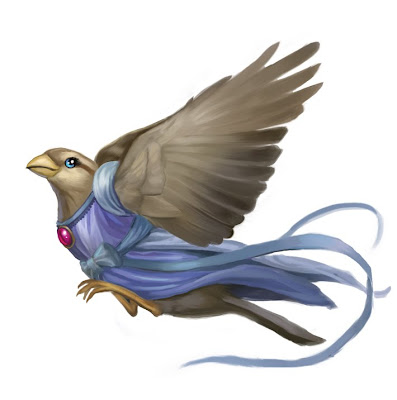
Introducing Princess Wrenevere

Although not one of the names suggested, this avian version of King Arthur’s Queen Guinevere, was inspired by the many creative entries. Thanks for all the terrific ideas.

Come to the Museum to see the enchanted birdhouses inspired by fairy tales in “Of Feathers & Fairy Tales,” October 1-31, 2011. The winner of the $25 gift certificate for the Museum Shop was drawn from all the entries (including those submitted online).

Here’s the list of names submitted by Museum visitors.

* multiple entries for this name

Submitted Names:

  • Aethemannae
  • Agustina
  • Airspania
  • Azuli
  • Azur Bella
  • Azure
  • Barbara Rose
  • Bella
  • Bella Bleu
  • Belle
  • Birdella
  • Birdie
  • Blue Angel
  • Blue Jade
  • Blue Muse
  • Blue Velvet
  • Bonnie Blue Bonnet
  • Brina
  • Bubblegum
  • Butafle
  • Candy
  • Chandra
  • Chirperella
  • Darling
  • Dorothy
  • Elegance of the Skye
  • Esme Bleu
  • Feather
  • Feathers
  • Featherella
  • Fiona *
  • Fiona Feather Bottom
  • Firenze
  • Florabelle
  • Flo on the Go
  • FloMagical
  • Florence *
  • Florence G.
  • Florence of Arabia
  • Florentina
  • Gesele
  • Glitter
  • Gloriana
  • Gold Griswold
  • Golden
  • Graylight
  • Impressa
  • Indigo
  • Indigo Plume
  • Iyanna Jasmine
  • Jasmine
  • Jewel *
  • Julia
  • Kismet
  • Lady Sophie
  • Laia
  • LaMone
  • Layla
  • Lily
  • Lily Laurel
  • Lisianthus
  • Lula
  • Lulu
  • Madame Lilly
  • Manora
  • Marabelle Queeny
  • Matilda
  • Merry Feathers
  • Mia
  • Naomi
  • Of the Clouds
  • Ovidia
  • Pelagia
  • Persephone *
  • Phoenix Feathers
  • Philomena
  • Pressy
  • Princy
  • Priscilla
  • Ribbon
  • Roy Al
  • Ruby
  • Scarlet
  • Sea Mist
  • Sigelinde
  • Silver Lake
  • Silverwing Rubyheart
  • Sonnet
  • Sophia
  • Sophie Rose
  • Sparkle
  • Spritzy
  • Susan
  • Turandot
  • Vadalia
  • Victoria
  • Yodio-Gumball
  • Zanzibar

Thursday, August 18, 2011

New Arrival on Campus


On the morning of 21 June, 2011, Sheila Wertheimer, our Gardens Supervisor, arrived on campus with a beautiful Ginkgo tree to be planted in front of the Krieble Gallery.  It required the help of Randy Robinson, our Groundskeeper, and two landscapers from Wertheimer and Associates - Jerry LeFever and Brian Renshaw -to get this tree off the truck and properly planted. The ginkgo tree is replacing a Japanese Tree Lilac that had occupied that space previously -  but not altogether successfully.

A few months earlier it was noted by the Museum’s Buildings and Grounds Committee that the Japanese Tree Lilac tree in front of the Gallery was not doing well. It was decided to replace it with a species that would prove long-lived, durable and resistant to drought conditions.  After much discussion, over a period of a month or so, the Committee accepted Sheila’s recommended choice of species.


The Ginkgo, (Ginkgoaceae), the oldest tree in captivity, is often called the Maidenhair Tree.  Its native habitat is Eastern China where it was first introduced to the US in 1784.  One of the world’s oldest trees, it has no living relatives. It was native to North America at one time. Dendrologists and gardeners alike often refer to the ginkgo as “undoubtedly one of the most distinct and beautiful of all deciduous trees:” (W.J. Bean, Trees and Shrubs Hardy in the British Isles, variable dates).

It’s distinctive fan-like shaped leaves turn a stunning golden yellow in the autumn.


 (Excerpt from Wikipedia -  Ginkgo palaeontology)

The Ginkgo is a living fossil, with fossils recognizably related to modern Ginkgo from the Permian, dating back 270 million years. The most plausible ancestral group for the order Ginkgoales is the Pteridospermatophyta, also known as the ”seed ferns”; specifically the order Peltraspermales. The closest living relatives of the clade are the cycads, which share with the extant G. biloba the characteristic of motile sperm. Fossils attributable to the genus Ginkgo first appeared in the Early Jurassic and the genus diversified and spread throughout the Laurasia during the middle Jurassic and early Cretaceous. It declined in diversity as the Cretaceous progressed, and by the Paleocene, the Ginkgo adiantoides was the only Ginkgo species left in the Northern Hemisphere while a markedly different (and poorly documented) form persisted in the Southern Hemisphere. At the end of the Pliocene, Ginkgo fossils disappeared from the fossil record everywhere except in a small area of central China where the modern species survived. It is doubtful whether the Northern Hemisphere fossil species of Ginkgo can be reliably distinguished. Given the slow pace of evolution and morphological similarity between members of the genus, there may have been only one or two species existing in the Northern Hemisphere through the entirety of the Cenozoic:  present-day G. biloba (including G. adiantoides) and G. gardneri from the Paleocene of Scotland. 

Wednesday, May 25, 2011

Metcalf Blooms Eternal

While our new exhibition In Bloom: Mountain Laurel and the Lyme Art Colony celebrates a flower that has yet to make an appearance in nature this season, Willard Metcalf's painting Dogwood Blossoms, seen in the detail above, captures a different fleeting springtime moment, one that is now gone for another season. The dogwood on the campus of the Florence Griswold Museum (below) was last week's outdoor "exhibition," so to speak.

The Boston Herald noted both the "fresh young blossoms" and the "fresh young girls" in a November 1906 review making mention of the dogwood painting. In this detail we see Metcalf's aspiring Impressionist brushwork as he reduces the delicate blossoms, as well as the face of the woman, to thinly applied smudges of color. Compared to other painted details we've examined in this series, Metcalf's handling is sparing and dry, with the weave of the canvas clearly visible.

Though Metcalf frequently dated his paintings, marking the year they were completed, we can actually construct an even more precise chronology of his work based on the blooming cycle of his subjects. Metcalf made his dogwood painting in the spring of 1906, the season after he painted the FGM's latest Metcalf acquisition Kalmia, a work featuring an explosion of mountain laurel blossoms along the marshy Lieutenant River. (You can read more about Kalmia here.) In 1905, he also painted The Poppy Garden while visiting in Old Lyme. If you stroll through our historic gardens behind the Griswold House this weekend you'll find the poppies haven't bloomed yet, but are not far off. With dogwood, mountain laurel, and poppies to occupy him, late May and early June must have been an incredibly busy time for Metcalf.

Friday, May 20, 2011

A Nineteenth Century Field Trip


The "phantom" woman I pointed out a couple of days ago is far from being the only thing mysterious about the Charter Oak. The legend of the tree and its place in Connecticut history has continued to grow over the centuries. When Frederic Church painted his version of the Charter Oak around 1846, the tree was still standing in Hartford. In his rendering, several figures can be seen visiting the tree, which was a historic landmark even then. This pair, a woman who appears to be writing and a young boy, may be on something like the equivalent of our educational field trips today.

Why take a field trip to see a tree, you wonder? The tree was the legendary hiding place for a very important colonial document, the Connecticut Charter. Granted by Charles II in 1662, this document ensured the inhabitants of Connecticut the right to a popularly elected governor who ruled in the king's stead. The charter also acted as a constitution for the colony, a service which it continued to perform into the nineteenth century. When King James II demanded the return of the Connecticut Charter in 1685 in order to create one giant royal colony in America the citizens of Connecticut took action.

The newly appointed governor arrived in Hartford (along with 60 armed men) to seize power in 1687, but the colonists resisted. In a move likely orchestrated to cause chaos and confusion, the candles of the meeting hall where the handover was to take place suddenly went out. When order was restored and the lights blazed again, the charter was gone and so was Captain Joseph Wadsworth.

Wadsworth spirited the document away and allegedly hid it in the hollow of a tree, now known as the Charter Oak, on the property of Samuel Wyllys in Hartford. There it stayed, secreted away for more than two years until William and Mary restored Connecticut's right to again rule itself under the original charter.

For its role in, literally, defending the constitution of the colony, the tree itself was honored for the rest of its days. When a storm brought the tree down in 1856, mourners gathered at the site, collecting souvenirs of the venerable oak. One of the "souvenirs," so to speak, exists to this day at the Florence Griswold Museum. Not the painting by Church, but an actual tree; a white oak on the grounds is a descendant of the original tree (at left). Acorns gathered from the Charter Oak have been planted, with ensuing generations of trees known as the "scions" of the Charter Oak.